Events · October 14, 2026 · 8 min
Trade Show Activation Checklist: Space, Power, Staffing, Queues and Custom Merch
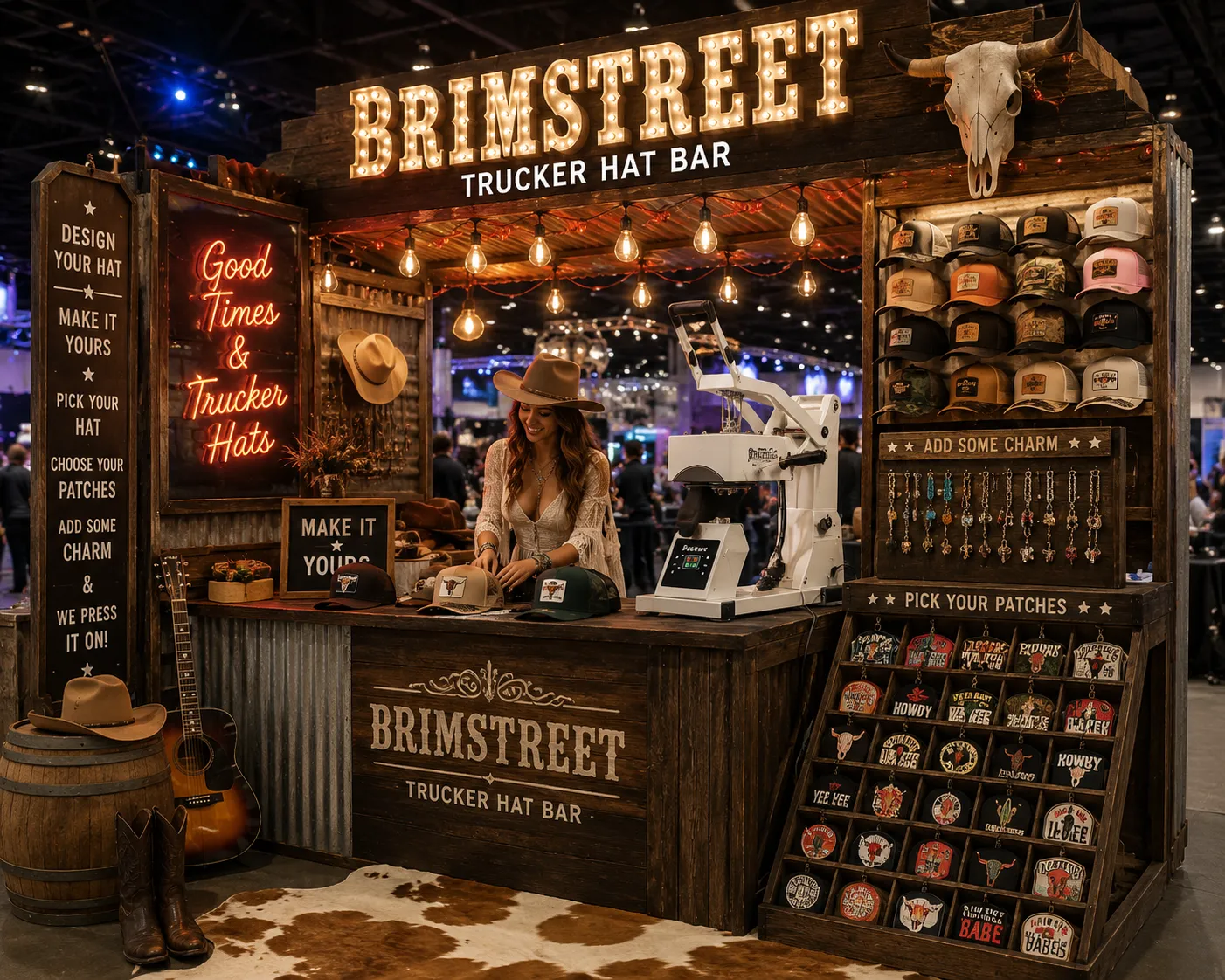
Adding an interactive activation to a trade show booth means planning far beyond the activation itself. You need floor plan approval, an electrical order, freight and drayage, labor rules, insurance certificates, staffing, queue space, lead capture, and lead time for any custom merch. Here’s the full checklist, roughly in the order the deadlines hit.
We’ll use a hat bar as the worked example, because it’s what we run and because it touches every item on this list. The checklist works for any hands-on activation: demos, games, live printing, sampling.
What Should You Do First?
Read the exhibitor manual. All of it. Every show publishes one (sometimes called the exhibitor service kit), usually through the show’s general service contractor, and it’s the rulebook for everything below.
- Download the exhibitor manual and service kit as soon as your booth is confirmed.
- Find the deadlines page and put every date on a shared calendar: discount order deadlines, advance warehouse window, move-in and move-out times.
- Note booth rules: height limits, sightlines, open sides, and anything about demonstrations or activities that draw crowds.
- Check the rules for outside vendors. Many shows require third-party contractors working your booth to be registered in advance, often as an exhibitor-appointed contractor (EAC), with their own insurance on file.
- Look for rules on heat-producing equipment. A hat bar uses heat presses, so confirm whether the show wants it disclosed or approved.
- Send the manual link to every vendor in your booth. Good vendors will read it.
How Much Space Does a Trade Show Activation Need?
Plan for three things, not one: the activation, the people waiting for it, and the crew running it.
- The station. A hat bar’s footprint is about the size of a demo counter, and it scales up or down to fit the booth.
- The queue. Keep the line inside your booth. Many shows don’t allow exhibitors to block aisles, and an activation that spills into the aisle can draw a visit from show management.
- Crew and storage. Staff need working room, and inventory (hats, patches, supplies) needs a home that isn’t the walkway.
- Sightlines. Put the activation where it’s visible from the aisle. The press is half the show.
- Floor plan approval. If your show requires a booth drawing, submit it with the activation, queue, and power locations marked.
How Do You Order Power for a Booth Activation?
At most convention centers, electrical service is ordered and billed through the show’s electrical contractor. Don’t assume a wall outlet is yours to use.
- Confirm exactly what your activation needs. A hat bar runs on one standard outlet.
- Place the electrical order before the discount deadline in the manual.
- Mark the outlet location on your floor plan. Power may come from a floor port or an overhead drop, and placement matters.
- Ask when power goes live during move-in so setup isn’t waiting on it.
- Budget for cords and cable management that meet show rules. Nobody wants a trip hazard in the queue.
How Do Freight, Drayage and the Advance Warehouse Work?
Freight is where first-time exhibitors get surprised. Two terms to know:
- Advance warehouse: a facility that accepts your shipment ahead of the show within a set window, then delivers it to your booth.
- Drayage (material handling): the service of moving freight from the dock or warehouse to your booth. It’s typically billed to the exhibitor by weight and is separate from your shipping cost.
Your checklist:
- Decide between advance warehouse and direct-to-show shipping, and note each option’s dates.
- Label every shipment exactly as the manual specifies.
- Clarify which vendors bring their own equipment and which ship through you.
- Book outbound shipping before the show closes, not during the scramble at tear-down.
Do Union Labor Rules Apply at Trade Shows?
At some venues, yes. Certain venues and cities have labor jurisdiction rules that define who can perform specific tasks, such as moving freight, building booth structures, or handling electrical work. The rules vary by venue and sometimes by show.
- Read the labor section of the exhibitor manual before assuming anyone can carry equipment in and set it up.
- Ask your activation vendor how they handle venue labor rules. A professional vendor asks about this before you do.
- Order any required labor before the deadline.
Heading to a big convention city? We travel nationwide from Orlando, including to Las Vegas and Chicago, and travel is quoted flat and up front.
What Insurance Paperwork Do Exhibitors Need?
- Check whether the show requires exhibitor liability insurance, and get your certificate in on time.
- Collect a certificate of insurance (COI) from every vendor working your booth, with additional insured wording that matches the manual exactly.
- Brimstreet is fully insured, and we provide a COI on request.
How Should You Staff an Activation?
Split the jobs. The people running the activation shouldn’t also be your sales team.
- Activation crew. A Brimstreet hat bar is fully staffed. Guests never operate the presses, and our crew guides patch choices, manages the line, and runs every press.
- Booth team. Your people are free to talk, qualify, and connect while guests browse and build.
- Briefing. Give the activation crew your key message and a clear signal for handing a guest to sales.
- Shift plan. Schedule breaks and coverage for the full show hours.
How Do You Design the Queue?
A good queue makes waiting part of the experience.
- Make the wait useful. At a hat bar, guests browse patches while they wait, which is exactly when your team can strike up a conversation.
- Explain the experience with signage. A simple “how it works” sign keeps the line moving and reduces repeat questions.
- Plan for surges. Show opening, session breaks, and the end of keynotes bring waves.
- Set a last call. Post the final build time so the line doesn’t outlast the show hours.
- Have a plan B for long lines. A come-back-later card or a timed slot keeps people from walking away annoyed.
How Do You Tie an Activation to Lead Capture?
An activation creates a natural conversation window. Lead capture makes sure the conversation doesn’t vanish.
- Rent lead retrieval through the show if you need badge scanning, and order before the deadline.
- Decide where the scan happens. Scanning as guests join the queue keeps it simple.
- Be upfront about it. A friendly “we’ll scan your badge while you pick patches” lands better than a gate.
- Add one or two qualifying questions your team can ask while guests browse.
- Tag activation participants in your lead list so follow-up can reference the experience.
What Lead Time Does Custom Merch Need?
Custom elements have the longest runway of anything on this list.
- Send artwork early. Clean vector files move fastest.
- Approve proofs promptly. Every revision round costs time.
- Allow a few weeks for custom patches. Production, approval, and delivery all take a slot on the calendar.
- Use the curated library on tight timelines. Brimstreet’s curated patch library is ready when the calendar isn’t.
- Lock hat colors and styles alongside your patch order.
What Should Happen After the Show?
- Send follow-ups while the show is fresh, referencing the hat they built.
- Share event photos with participants and on your channels.
- Debrief the team: queue flow, staffing gaps, what to change next time.
- Reconcile show invoices, including drayage and electrical.
- Confirm outbound freight arrived.
For more on how we plan show floors, see our trade show hat bar page.
Get a Trade Show Quote
Send your show dates, city, booth number, and exhibitor manual link, and we’ll return a flat, itemized quote within one business day. We read the manual too, so nothing on this list slips. Request a quote.